 |
 |
 |
 |
 |
 |
 |
 |
 |
 |
 |
 |
 |
 |
 |
 |
 |
 |
 |
 |
 |
 |
 |
 |
 |
 |
 |
 |
 |
 |


|
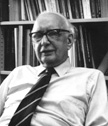
Dr.
Clinton N. Woolsey
Clinton
Woolsey was one of the first early neurophysiologists in the United
States with a broad interest in experimentally defining various
kinds of functional and structural organization in the brains
of a variety of mammals. Woolsey pioneered the electrophysiological
mapping of cerebral cortex. After receiving his MD at The Johns
Hopkins University School of Medicine, he became a research physiologist
in the Department of Physiology as an assistant to Dr. Philip
Bard (who wrote the major textbook of Physiology used by Medical
Schools in the United States at the time). Woolsey was recruited
by the University of Wisconsin to set up a Laboratory of Neurophysiology
there. This was one of the few basic research laboratories devoted
to training in neurophysiology that existed in the late 1940's.
To
assist him in localizing neuroanatomical structures that had been
surgically removed, or recorded from, Woolsey invited Dr. Konrad
Akert, from Switzerland to join the laboratory of Neurophysiology
to become the neuroanatomist in charge. Later, Dr. Woolsey recruited
Dr. Jerzy E. Rose to join this expanding Laboratory when he had
secured funding to design and build two floors in the new Medical
Sciences Building being built as an adjunct to the existing Medical
School training Facilities.
|

List of Specimens | Explore Collections | Brain Sections | Brain Evolution | Brain Development | Brain Circuitry | Brain Functions | Location and Use | Related Web Sites | Contact Us | Search MSU Database | Personnel | Home